

Wanted: Someone Responsible
The value of your time is equal to where and how you spend it. But what happens when an entire generation's questions—and worth—are systematically devalued?
Wanted: Someone Responsible
Last week, I ended my essay titled “How Many American Minutes Is One Turkish Hour? Same Old.” with a question: “As the capital of our lifetime is being spent, why does our time not gain value?” I spent time on this question. Is it a “valuable question” worth spending time on? By what measure can the value of my questions—and of my time—be determined? As I searched for an answer, I paid attention to how I was spending the time in which I was seeking it. I was looking for an answer to a question. “Then the value of my time must be equal to the value of this question,” I concluded simply. From this perspective, the value of your time is equal to where and how you spend it. Look at where you spend your time and you will see its worth. Thus, where you spend your life reveals the worth of your life.
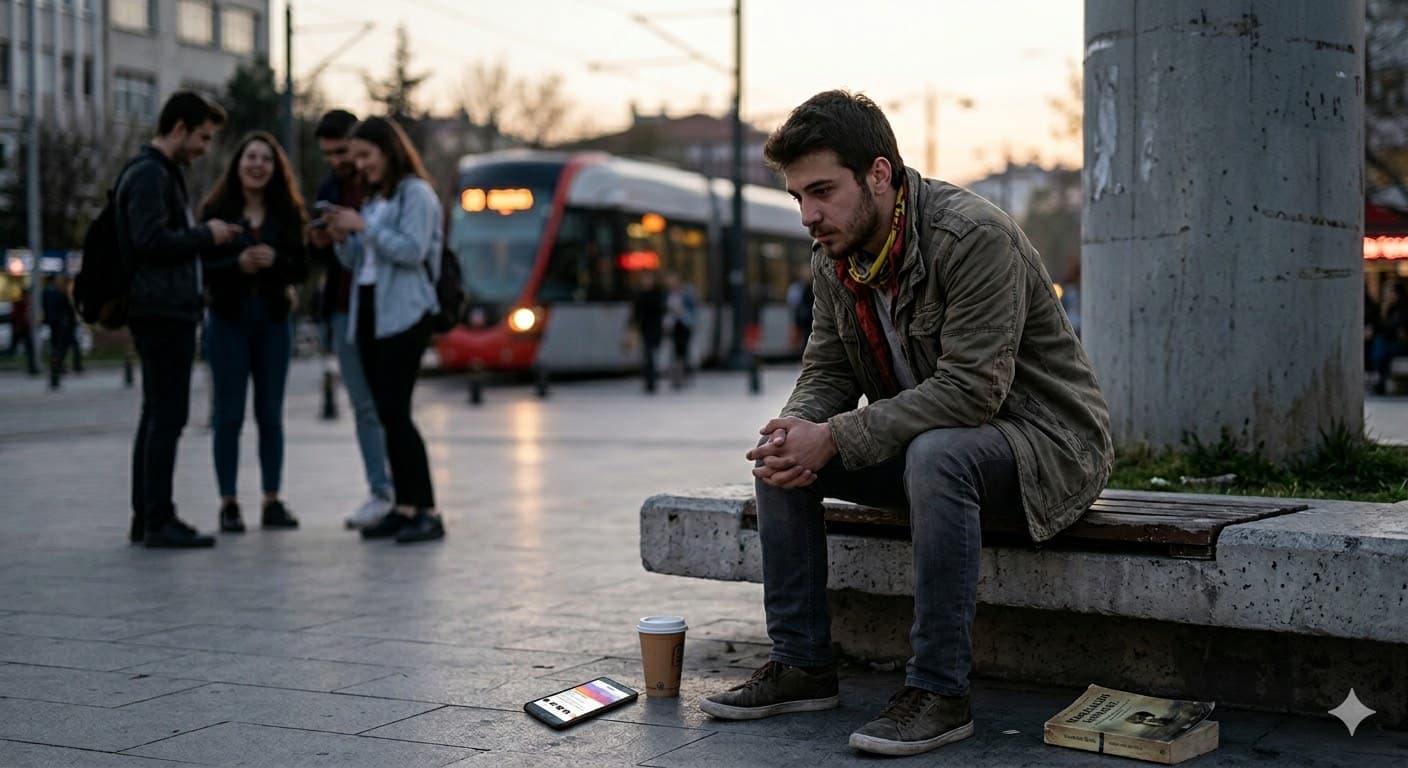
While this question remained fresh in my mind, I noticed that a colleague who came to work was wearing a bright, new outfit. I asked why he had worn new clothes to a workplace where they would quickly become dirty. I saw this as an example confirming my thought: the value of something depends on where you spend it. For my friend, the value of his clothes was such that they could be dirtied and used daily. This young friend also had questions—questions he expressed while laughing at them, as if mocking his own seriousness. Yet these were serious questions about his life, and he admitted that he sometimes cried over them. I wondered why he spoke of such serious matters in a joking tone. When he told me about conversations with his friends, I understood. Whenever he shared these questions with them, they mocked him and belittled his concerns. Either he had begun to belittle his own questions as well, or he feared they would be belittled again. I concluded that this was a psychological defense. At the same time, I witnessed how his questions had been devalued. Just as he had devalued his bright clothes by wearing them in a dirty environment, he had devalued his valuable questions by placing them in an indifferent one.
In truth, there stood before me a young man who laughed at nearly everything he heard and said. It was clear that the matter did not end there. When I broadened my view from this young man’s world to the world of our country’s youth—and even of its adults—I became convinced, with a kind of pleading alarm, that the value of youth had been entirely drained and debased across all areas of life. Even values that belong to our most human side—let alone being respected—seem scarcely to exist as concepts in the mind. As for notions such as homeland, civilization, history, language, family, and nation, they appear in hearts as hollow shells, emptied of meaning. Love, affection, loyalty, trust—only their names remain. Patience, effort, craftsmanship, and skill have not yet been encountered. My God! Are these not my friends, my siblings, my children, the people of my country, my future, my security, my representatives—are they not a part of me?
Faced with this state, I felt as though my soul shivered, my heart grew cold, and my mind fell into helplessness. While the youth—the most valuable asset and capital of my country—struggle in pits of worthlessness before our very eyes, what value is there in my speaking of “value” at all? In such a situation, what value can my own reflections on value add to anyone?
In the hierarchy of values, this scene seems to mark the lowest rung. Perhaps this situation has already been named appropriately in the terminologies of politics, civilization, literature, psychology, and religion. It is not an unknown phenomenon. Because it is known, is there nothing to fear? Is that so? Then what does naming it solve? What contribution does expressing the problem with a word or a term make toward its solution? What matters is this: what can change the meaning of the following brief list for these young people?
Family: first on the list of things to be kept at a distance
Education: too worthless to earn a good car
Profession: far beyond the threshold of patience that does not exist
Country: not a place where their great talents can flourish
History: yesterday’s clothes and tomorrow’s clothes
Love: Instagram
Respect: authority
Trust: money
We could extend this list further, but our stomach may not bear it. Yet how can our hearts bear this degrading sense of worthlessness? Shall we do so by ignoring those who hold this mindset? By refusing to see or hear them? By excluding them? Are they not part of our human and national existence? I must state something more clearly—and more frightening: they are our reflection. By refusing to look at them, we cannot escape this reality of our own. They are the clear reflection and dark shadow of our emptiness. Those who have the courage to face this will draw from it both a question and a responsibility.
As I thought about it, the questions grew into an iceberg pressing upon my heart. My mind was overtaken by a kind of heedlessness born of sorrow, and for a moment I found myself in that same pit of worthlessness. What value do my actions and writings have? It seemed to me as though we write and read for ourselves alone; if someone says something, we simply amuse ourselves. I looked at the things I valued most. I looked at books. They suddenly appeared worthless in my eyes. Poor, wretched books! Shelves full of them… “Will these help the youth?” I asked. They do not have the patience to look at a book for ten minutes. And even if they look, and read, and understand, at best it becomes something to be consumed on social media—an object of othering.
“Consumed.”
“Othering.”
“Object.”
Perhaps these are the clues.
Perhaps the key words to the chain of “why” questions that lead to this outcome…
The same tragedy described in Man’s Search for Meaning seems to be unfolding again, in another form.
The concentration camps of today’s world are not less merciless.
But whose camp is it now—and who is the captive?

Comments (0)
No comments yet. Be the first to share your thoughts!